
 English
 Hindi
Hindi Marathi
 Urdu
Urdu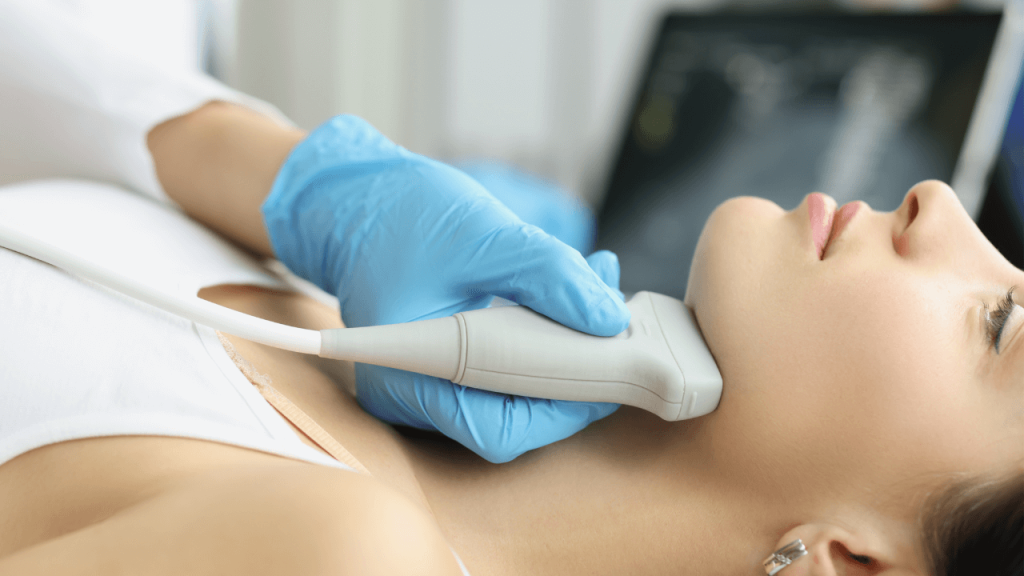
Thyroid nodules are very common, especially in adults. While many are harmless and require no treatment, some cause neck swelling, difficulty swallowing, cosmetic concerns, or anxiety due to continuous growth. Traditionally, surgery was the standard solution. Today, a newer minimally invasive technique, Microwave Ablation (MWA), is changing the way thyroid nodules are treated.
In a nutshell: Microwave ablation offers an effective, scar-free, thyroid-preserving alternative to surgery for selected patients, with a faster recovery, no general anaesthesia, and excellent long-term results.
What Is Thyroid Nodule Microwave Ablation and How Does It Work?
Thyroid nodule microwave ablation is a 20–40 minute, image-guided procedure where an Interventional Radiologist uses a thin microwave probe, inserted through a tiny needle puncture, to heat and shrink thyroid nodules. It requires no surgery, no general anaesthesia, and leaves no visible scar.
Microwave Ablation (MWA) is performed by an Interventional Radiologist using real-time ultrasound guidance. A slender microwave probe is inserted directly into the thyroid nodule through a small skin puncture. Controlled microwave energy then generates localised heat that destroys the abnormal thyroid tissue while leaving the surrounding healthy gland intact.
Over the weeks and months following the procedure, the treated nodule gradually shrinks in size, relieving pressure symptoms, reducing visible neck swelling, and improving the patient’s overall comfort and cosmetic appearance.
Why Choose Microwave Ablation Over Thyroid Surgery?
Microwave ablation treats only the nodule while leaving healthy thyroid tissue intact, so patients typically avoid lifelong hormone replacement tablets, recover within 24–48 hours, face a lower risk of nerve or parathyroid injury, and go home the same day, advantages surgery simply cannot match.
Here is a detailed look at why microwave ablation is increasingly preferred over conventional thyroid surgery for eligible patients:
1. No Surgical Scar
One of the biggest concerns for many thyroid patients is the visible neck scar after surgery. Since microwave ablation is performed through a tiny needle puncture, there is:
* No major incision
* No stitches
* Minimal or no visible scar
This makes it especially attractive for young patients and those concerned about cosmetic appearance.
⸻
2. Thyroid Gland Preservation
In thyroid surgery, part or all of the thyroid gland is often removed. This may lead to lifelong thyroid hormone deficiency.
Microwave ablation selectively treats only the thyroid nodule while preserving the healthy thyroid tissue.
Benefits of thyroid preservation:
* Better natural thyroid function
* Reduced chance of hypothyroidism
* Lower need for lifelong thyroid hormone replacement tablets
⸻
3. Minimally Invasive Procedure
Unlike surgery, microwave ablation does not require large cuts or extensive tissue dissection.
The procedure is:
* Needle-based
* Ultrasound-guided
* Performed under local anesthesia
* Usually completed within 20–40 minutes
Most patients remain awake during the procedure and can go home the same day.
⸻
4. Faster Recovery
Recovery after thyroid surgery may take several days to weeks. In contrast, patients undergoing microwave ablation usually experience:
* Minimal pain
* Faster return to daily activities
* Short hospital stay or daycare procedure
* Quick recovery with minimal discomfort
Many patients resume routine activities within 24–48 hours.
⸻
5. Lower Risk of Complications
Although thyroid surgery is generally safe, it still carries certain risks such as:
* Vocal cord nerve injury
* Bleeding
* Infection
* Low calcium levels due to parathyroid injury
Microwave ablation has a lower complication rate in appropriately selected patients because it avoids major surgery and general anesthesia.
⸻
6. Avoidance of General Anesthesia
Most thyroid surgeries require general anesthesia, which may not be suitable for elderly patients or those with medical conditions.
Microwave ablation is commonly performed under:
* Local anesthesia
* Mild sedation if needed
This reduces anesthesia-related risks and improves patient comfort.
⸻
7. Excellent Cosmetic and Symptomatic Results
After microwave ablation, thyroid nodules gradually shrink over months.
Patients commonly notice:
* Reduction in neck swelling
* Relief from pressure symptoms
* Improved swallowing comfort
* Better cosmetic appearance
Studies show significant volume reduction in benign thyroid nodules after ablation.
⸻
8. Repeatable and Organ-Sparing Treatment
If required, microwave ablation can be repeated safely for residual or recurrent nodules without removing the thyroid gland.
This organ-preserving approach is one of the major modern advances in thyroid treatment.
Will Thyroid Microwave Ablation Leave a Scar on My Neck?
No. Because the procedure uses a needle-thin probe rather than a surgical incision, there are no stitches and minimal to no visible marks on the neck, making it particularly suited for younger patients and anyone with cosmetic concerns.
The absence of a scar is one of the most frequently cited reasons patients choose microwave ablation over surgery. Traditional thyroidectomy involves a horizontal incision across the front of the neck, which can remain visible for months or even years. Microwave ablation, by contrast, requires only a needle puncture that typically heals without any trace.
For patients who have spent years feeling self-conscious about neck swelling and do not want to trade one visible concern for another, this benefit is particularly meaningful.
Who Is a Good Candidate for Thyroid Nodule Microwave Ablation?
Patients with benign thyroid nodules causing neck swelling, pressure, difficulty swallowing, or cosmetic discomfort are strong candidates. Those unfit for general anaesthesia, unwilling to undergo surgery, or with nodules recurring after a prior operation may also benefit significantly.
Microwave ablation is especially beneficial for patients with:
• Confirmed benign thyroid nodules on ultrasound and biopsy
• Symptomatic nodules causing pain, pressure, or difficulty swallowing
• Cosmetically bothersome neck swelling
• Reluctance or inability to undergo surgery
• Medical conditions that make general anaesthesia high-risk
• Recurrent thyroid nodules after previous surgery
Important: Proper evaluation with ultrasound and a biopsy is essential before treatment to confirm that the nodule is benign and suitable for ablation. A specialist consultation is the necessary first step.
Is Thyroid Microwave Ablation Safe, and What Are the Risks?
When performed by an experienced Interventional Radiologist under ultrasound guidance, microwave ablation carries a lower complication rate than surgery, avoiding the risks of vocal cord nerve injury, calcium imbalance from parathyroid damage, post-operative infection, and general anaesthesia side effects.
Like any medical procedure, microwave ablation is not entirely without risk, but the risk profile is considerably more favourable than open surgery. Reported side effects are generally mild and transient, including:
• Temporary discomfort or warmth around the treated area
• Minor swelling or bruising at the needle entry point
• Rare, transient voice changes that resolve on their own
Serious complications are uncommon when the procedure is carried out by a trained specialist with appropriate ultrasound guidance and patient selection. Choosing an experienced Interventional Radiologist significantly optimises outcomes and minimises risks.
Looking for a Thyroid Nodule Specialist in Chhatrapati Sambhajinagar?
Dr Amol Lahoti is an Interventional Radiologist based in Chhatrapati Sambhajinagar with specialised expertise in image-guided thyroid nodule ablation. Patients from across Maharashtra visit Century Hospital for evaluation, ultrasound assessment, and minimally invasive thyroid treatment.
If you or a family member has been diagnosed with a thyroid nodule and are exploring treatment options, consulting an experienced Interventional Radiologist is the right first step. Dr Amol Lahoti at Century Hospital, Chhatrapati Sambhajinagar, specialises in:
• Ultrasound-guided thyroid nodule evaluation
• Fine-needle aspiration biopsy (FNAB) for nodule characterisation
• Microwave ablation for benign symptomatic thyroid nodules
• Image-guided minimally invasive procedures
📋 Book a Thyroid Nodule Consultation
Dr Amol Lahoti | Interventional Radiologist | Century Hospital, Chhatrapati Sambhajinagar
Get a specialist evaluation for your thyroid nodule, understand your options before deciding.
Conclusion
Microwave ablation is an advanced minimally invasive treatment that offers several significant advantages over conventional thyroid surgery for carefully selected patients. With no major scar, preservation of natural thyroid function, a faster recovery, lower complication rates, and excellent cosmetic outcomes, it is rapidly becoming an increasingly preferred option across India and the world.
Patients with thyroid nodules should discuss all available treatment options with a qualified specialist to determine the most suitable approach for their individual situation. Do not delay seeking an evaluation, early assessment leads to better outcomes.